
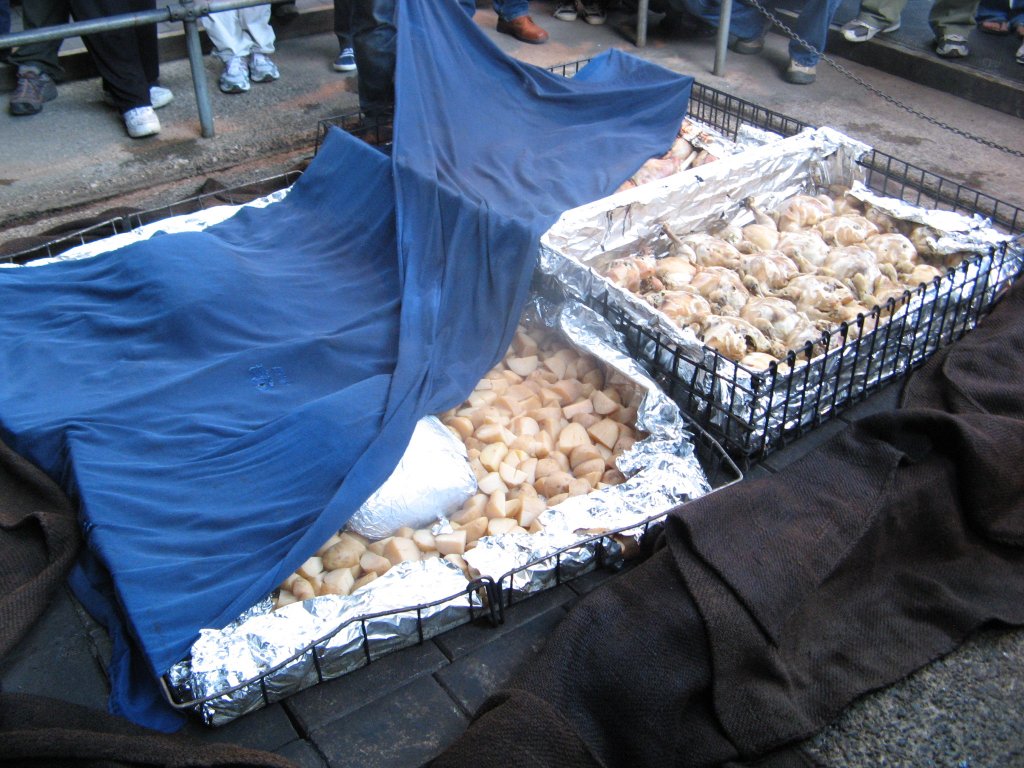
RotoruaBetween Mt Doom and Hobbiton, we spent one night at Rotorua on Lake Rotorua. It is a very pleasant, cosmopolitan city with broad avenues and many parks with lawn, trees, and gardens. At the i-Site we signed up for a motel with its own sulfur-y smell, heated outdoor pool (most motels have that in this region with its abundant volcanic activities). We were able to get onto that evening’s Maori dinner (hangi) at the Mitai facility, followed by a wildlife tour at Rainbow Springs, a conservation-wildlife protection facility under Maori oversight. At the Rainbow Springs, we had our first encounter with kiwis (the birds) inside a darkened enclosure – too dark to take any photo. Rainbow Springs has a very successful kiwi breeding and release program. Our table of fellow diners were not very diverse – we were seated across from an American couple from the Washington D.C. area who were retired teacher and principal. At the other end of the table were two Australian couples. The most interesting was the retired Australian veterinarian and his wife. He was here in NZ for his annual fly-fishing trip. One of his projects during his career had been with the project to reduce koala populations through birth control*. (*The population of koala has been in decline in the mainland of Australia. The Australian government currently lists the koala as a priority species for convervation status. However, koalas eat almost entirely eucalyptus leaves, and lots of them. In some islands, such as Kangaroo Island, koala have decimated this habitat. Birth control is being used to reduce their population in those island to a more sustainable level.) The Maori dinner-show was alright. It gave us a taste of the Maori, albeit in a commercialized setting. The Maori dinner was cooked in a pit in the ground, similar to the luau in Hawaii (not surprising – they are Polynesians). But I like the luau food better. 
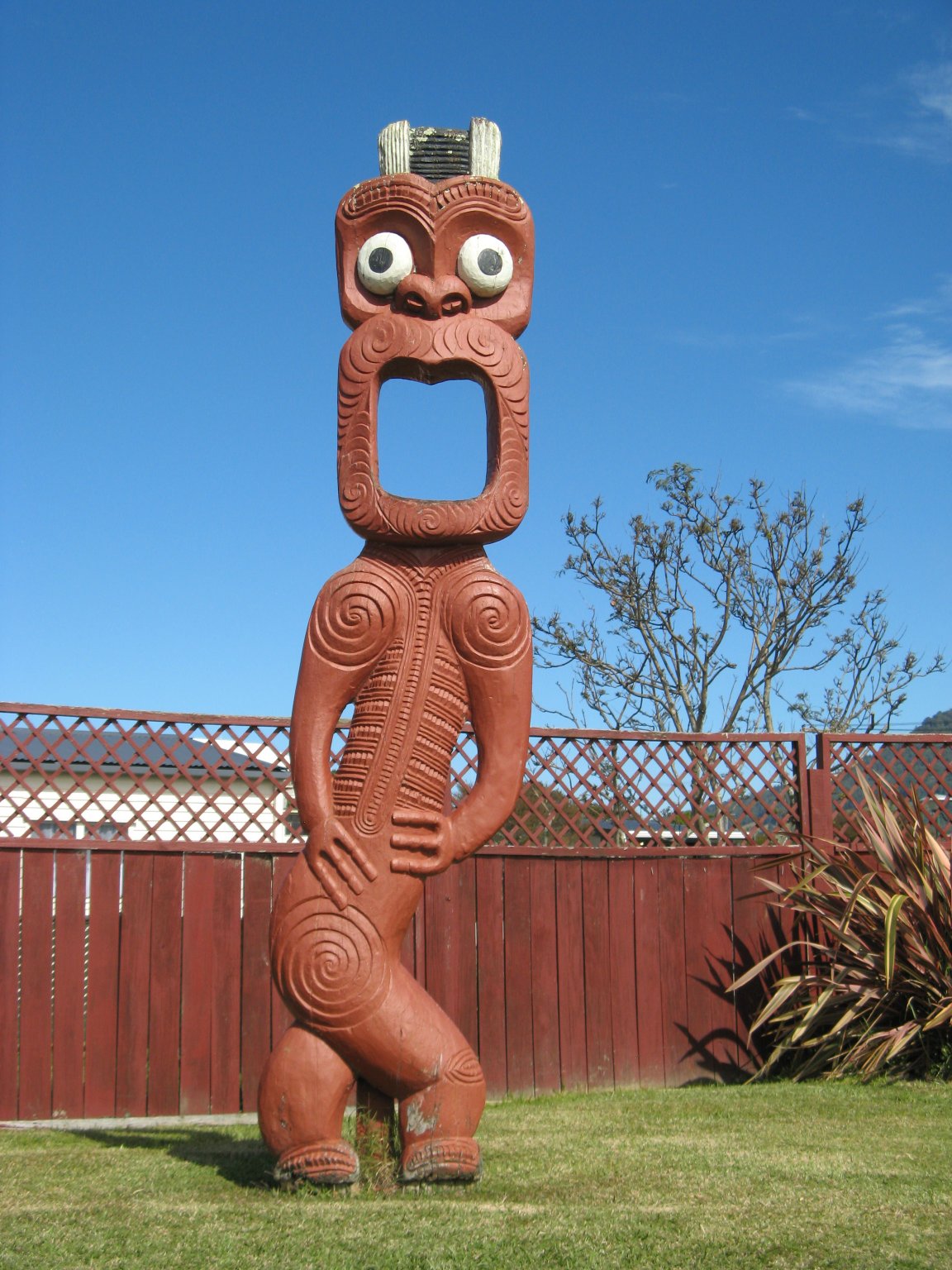
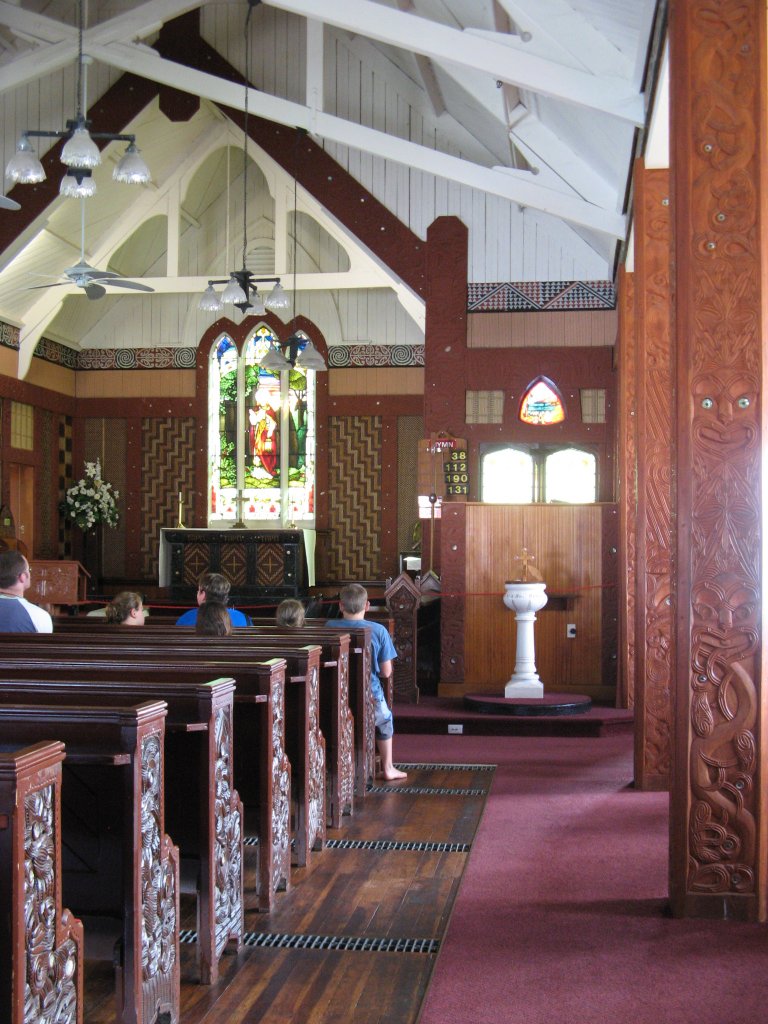
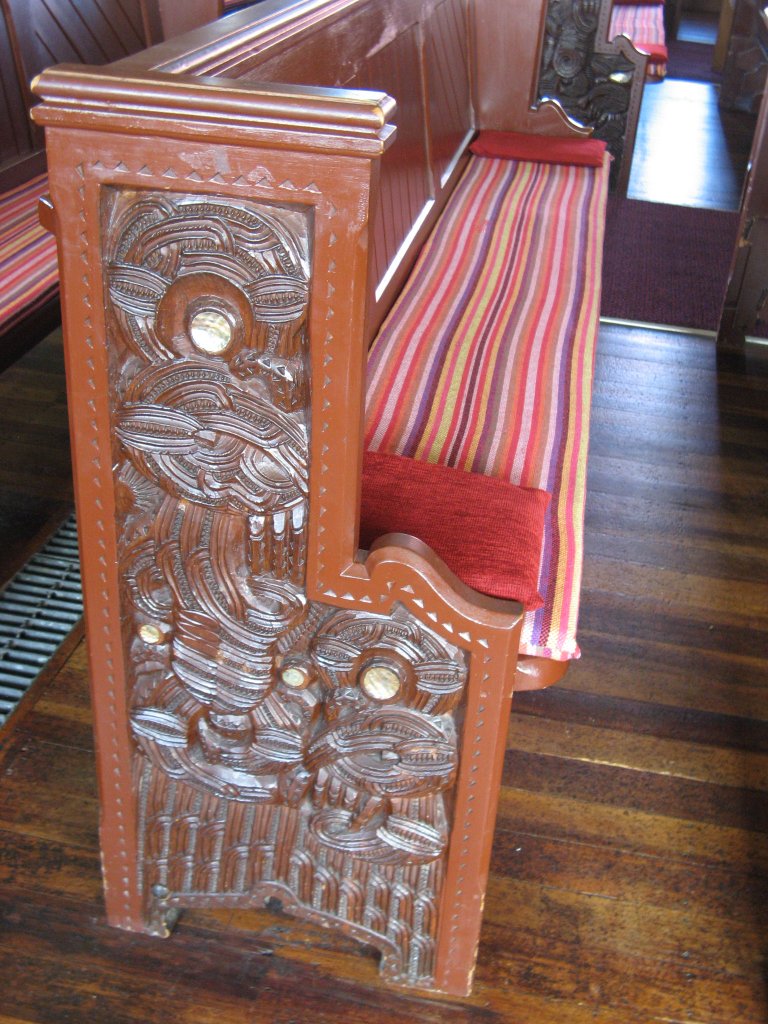
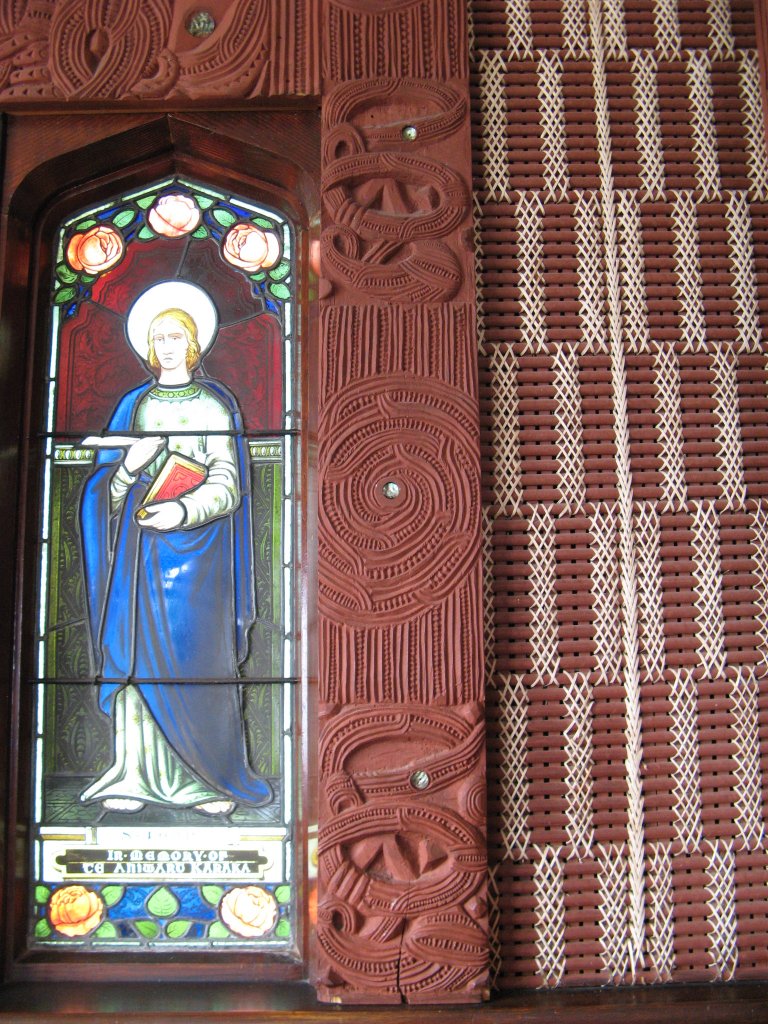
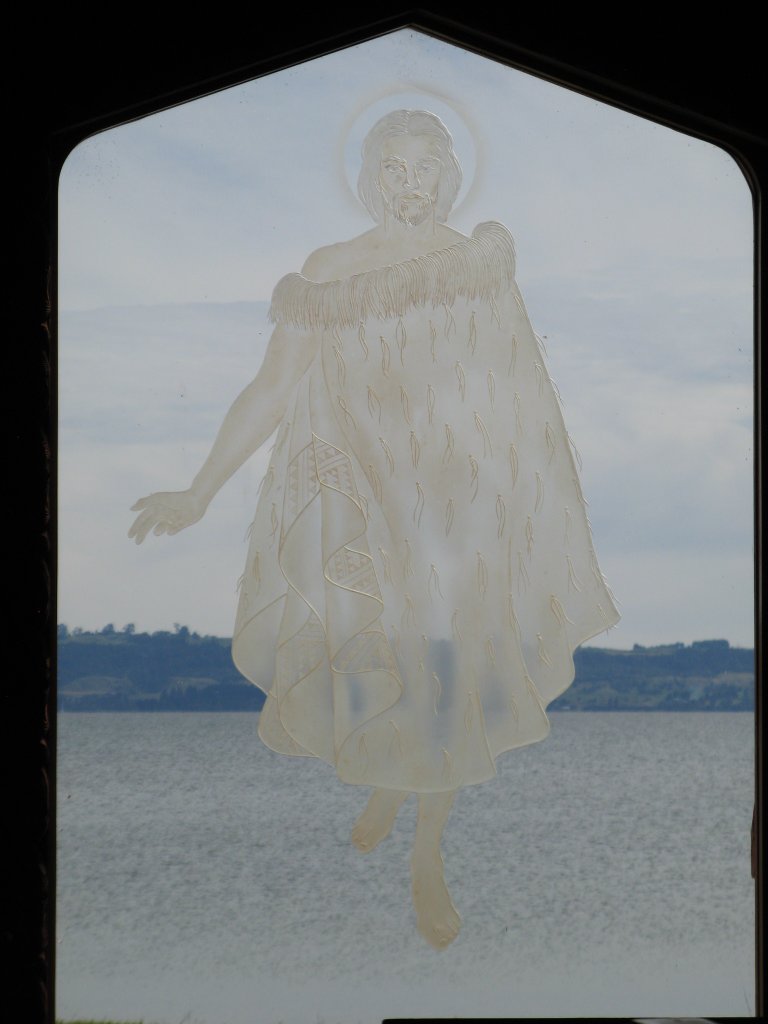
The highlight of the meal was the dessert pavlova. It is an Australian/New Zealand dessert named after the Russian ballerina Anna Pavlova. It is a meringue-based dessert with a crisp crust and soft, light inside. The dessert is believed to have been created in honor of the dancer either during or after one of her tours to either country in the 1930s. The nationality of its creator has been a source of argument between the two nations for many years. We had pavlova in a bar in the South Island, which Elisha and Judy claimed did not look anything like the real thing. But this one we had in the Maori dinner was the real deal - after we checked an image on the internet. Next morning we walked around downtown Rotorua and near the lake, and checked out an Anglican church and Maori community center both with elaborate Maori carvings. Inside the church, the ends of pews have Maori carvings and the back wall is a woven rattan in a decorative pattern. The morning got fairly hot, we had lunch downtown. Then we walked to a park with the historical museum, lawns for bowling, gardens - very British. 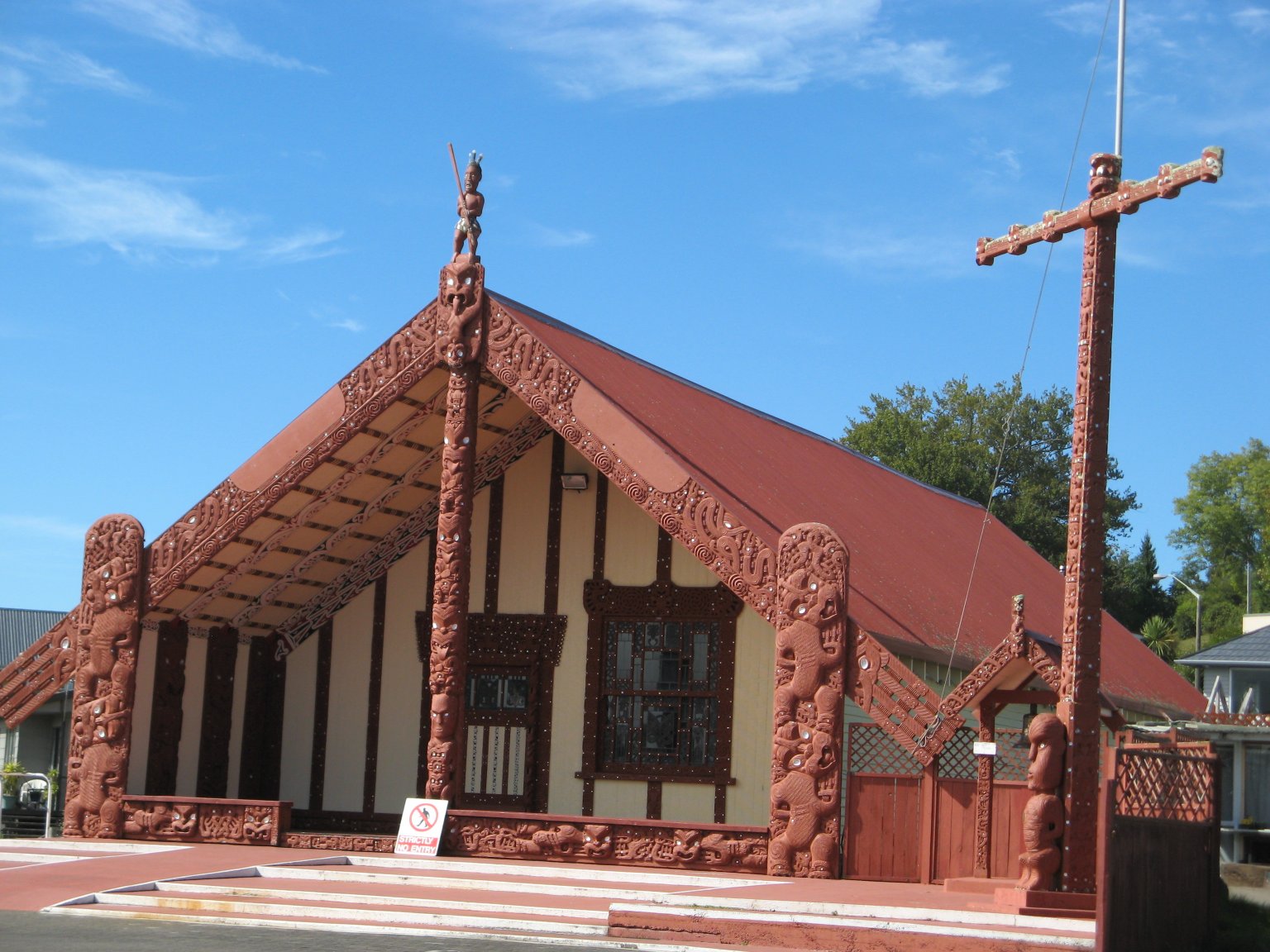


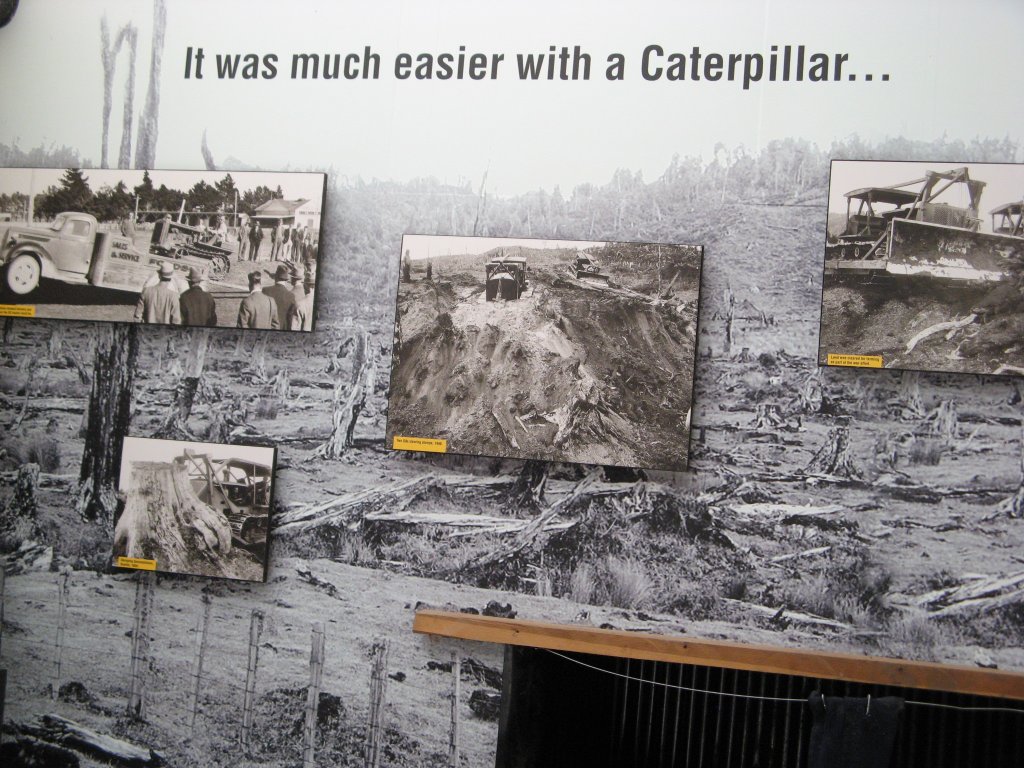
Leaving Rotorua, we stopped at the Caterpillar tractor museum put together by one man who wanted to tell the tale of New Zealand’s economic history as aided by Caterpillar (the U.S. manufacturing company) power. Videos in the museum showed proudly how the forests were cut (with the help of Caterpillar tractors, of course) and the land turned into sheep grazing country. The videos reminded us of the gung-ho development policies in the 50's and 60's in the US. But they are so politically incorrect now in the US. Another video showed how scientists discovered that a small amount of cobalt added to the volcanic soil cured the bush sickness (loss of appetite and poor growth, even death) in sheep that occurred in the early days of NZ's grazing pasture development. Yay for the scientists! 
|