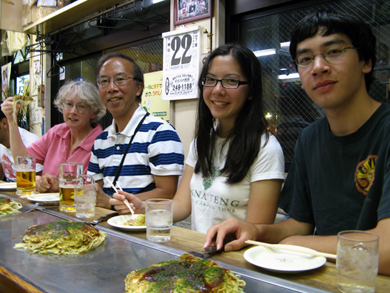
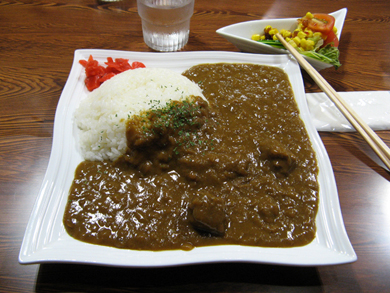
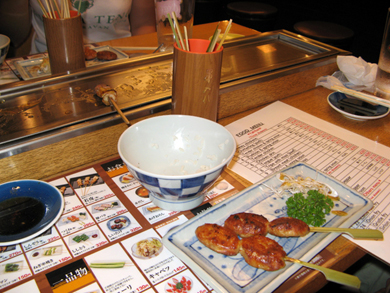
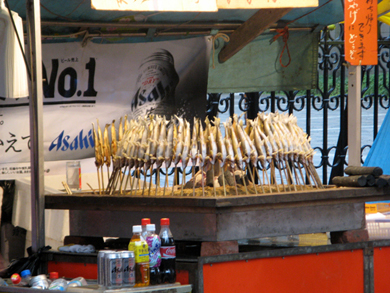
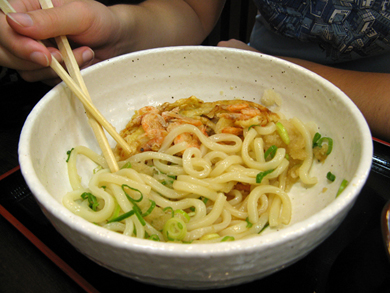
Japanese FoodOne of the most interesting parts of traveling in a foreign country is, of course, the food. Japanese food involves a lot of noodles, both soba (thin noodles made from buckwheat flour) or udon (thick noodles made from wheat). These are either served hot in soup or cold with some kind of dipping sauce. Strangely, we never came across any hot noodle dishes that didn't involve soup, even though we live just ten minutes away from a Japanese place that serves yakisoba (noodles stir-fried with vegetables and meat, rather similar to the Chinese style of cooking). Most restaurants offer a mix of meal sets - which are large entrees that include a main dish, several small vegetable dishes, and often miso soup - and single dishes. The main or single dish usually involves either noodles or rice or, infrequently, tofu, and also contains some sort of meat or seafood, whether it be fish, shrimp, beef, or pork. We were surprised to notice that a lot of meat is served fried. What happened to teriyaki? Well, we have no idea either. 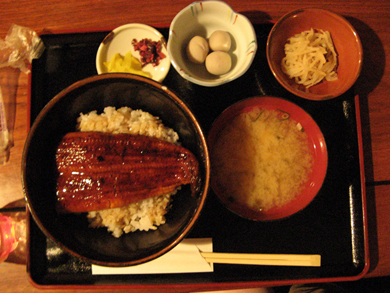
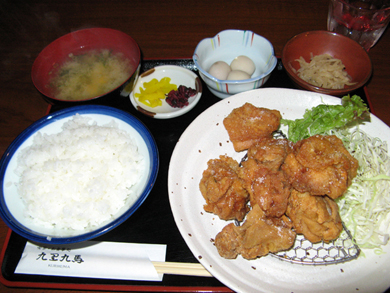
A typical meal set with eel and rice. A meal set with fried chicken.The most unique meals were probably the ones we ate while staying at the ryokan in Tsumago, where we were served elaborate dinners and breakfasts of traditional Japanese food. It might not look like a lot of food when placed in all those tiny separate dishes, but it was actually pretty filling. We also had small glasses of plum wine with dinner, which Philip thought was gross, but Alice rather liked it (though it would have been even better without the wine). 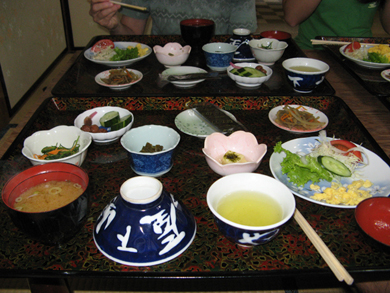

Featuring scrambled eggs, lots of veggies, and ... seaweed? Miso soup, some interesting beans, and apple jello.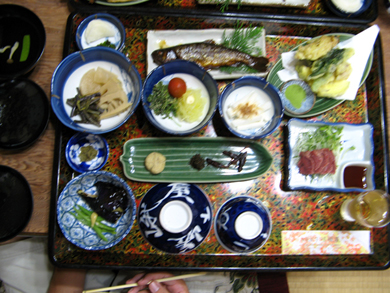

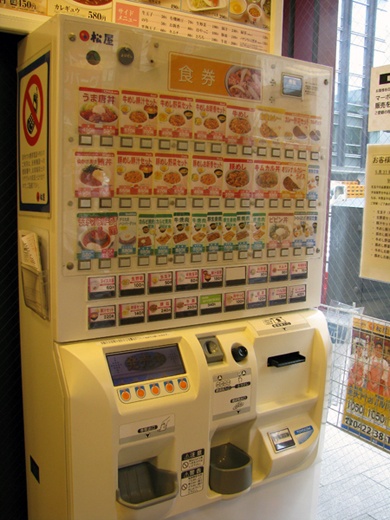
Tempura, grasshoppers, and raw horse meat. Both fried and raw fish. And rice, of course.We did have water bottles with us, but in Japan's intense heat, the hotel tap water quickly became warm and unpalatable. So we ended up drinking a lot of soda, mostly out of the vending machines that line every street in Japan (even in the rural mountains!). Coke is one of the few sodas easily found in Japan (most vending machines have iced green tea, iced coffee, and sometimes even beer). Our great discovery was a delicious lemon-flavored soda called C.C. Lemon, which we drank whenever we could. A pity this brand probably can't be found in the U.S. 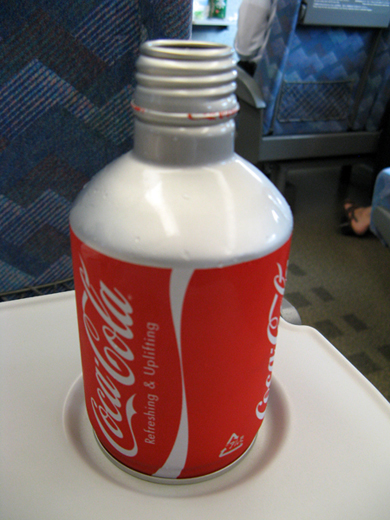
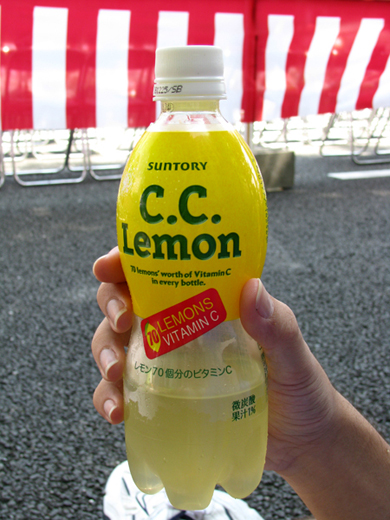
A Coke can with an uncanny resemblance to a bottle of motor oil. C.C. Lemon - with 70 lemons' worth of Vitamin C in every bottle!There appears to be quite a bit of French influence in Japan, from stores with French names to t-shirts bearing grammatically incorrect French slogans. There are also a large number of bakeries in the cities, especially in train stations. We relied on these bakeries (and the occasional Starbucks) for our breakfast. Many of their products appear no different from European pastries, but often have an Asian-flavored twist: there are pastries with nuts, pastries with sugar, and pastries with a surprise red bean filling. 

Some very unique cookies in a boulangerie in Kyoto Station. Military-themed buns with red bean filling.We ate most of our meals in restaurants, but occasionally we got a craving for something different. We only tried "take-out" once: buying bento boxes from a grocery store and bringing them back to our hotel room to eat. Not only was the room crowded and the table way too small for four people to eat at, but we forgot to get chopsticks. The other important source of food was McDonald's, which we frequented for the ¥100 ice cream cones, a bit hit in 90-plus-degree weather. McDonald's are much more popular in Japan than here in the U.S., for food and also as a teenage hangout where kids go after school to eat a snack, talk, and study.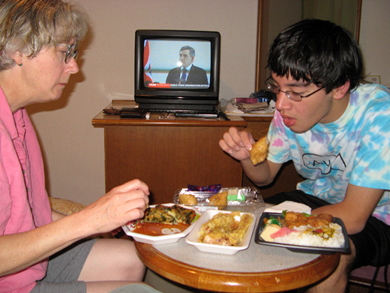

Left: Without chopsticks, we resorted to fingers and toothpicks to eat.
|