|
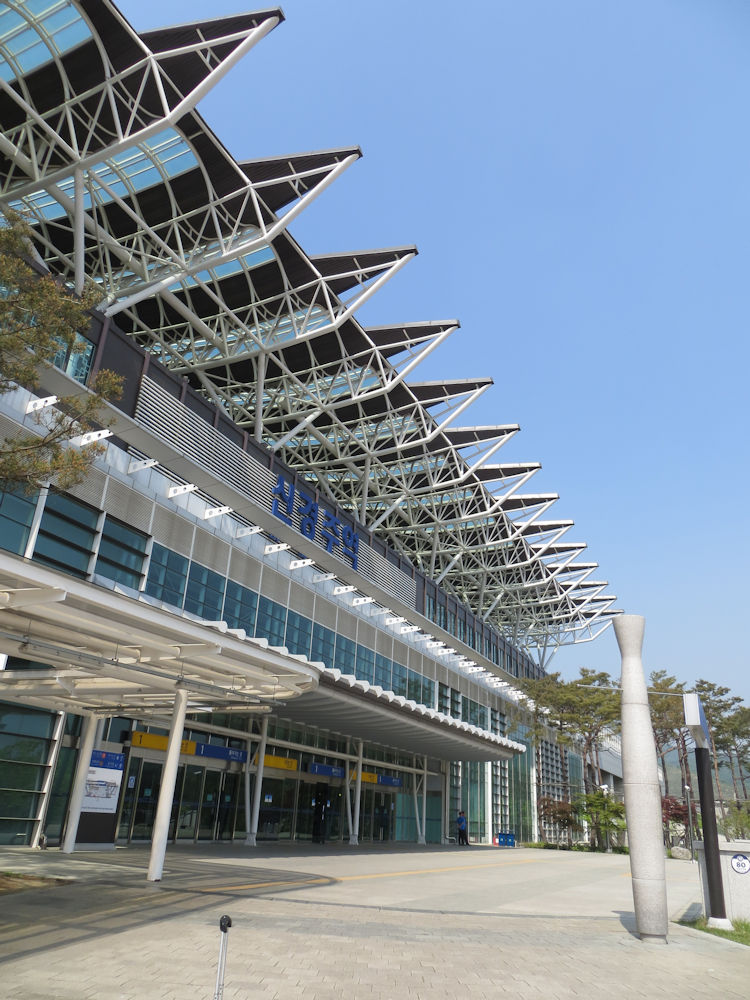
Seoul - Part 2The next day we took the bullet (KTX) train back to Seoul. The bullet trains leave from Singyeongju (New Gyeongju) Station. It was a 20 minute drive or more, first to the outskirts of Gyeongju then through a tunnel and out into countryside and onto freeway. It was only two years old. It has a soaring roof in the shape of a series of waves. We bought tickets and checked out the gift shops and were surprised to find the decorative ceramic (or concrete?) roof-end tiles, which Sally had been saying would be the right souvenir from our trip (and expected such would only be available at a building-supply store). We bought one with a lion face.

The train went through a number of tunnels through the mountains, then some small cities, and finally from Suwon on to Seoul. There were many locations with numbers of apartment buildings in a complex, all the same height – maybe 30 to 50 stories? An unimaginably high percentage of the population lives in these. They had similar numbers on the sides – 103, 101, 104, 105…, but never 23 or 24, never 1, 2, 3, 4, always 101 to 107. The train took us to Seoul Station where we enjoyed a good lunch at 1 or 2 pm at the food court, which was highly organized, with 12 different stations for ordering food and 12 different places to discard your empty dishes and waste afterwards. We wished we had known about this food court when we first arrived in Seoul from the airport. Sally had the real thing – squid stew in red sauce, with nice white rice on the side. In Seoul Station, we noticed a lot of people with matching bright yellow jackets, or bright yellow T-shirts that said Falun Dafa is Good. It was Falun Gong. From the second floor we could look out the windows and see them performing a dance and singing or whatever they do, down on the open square next to the building.


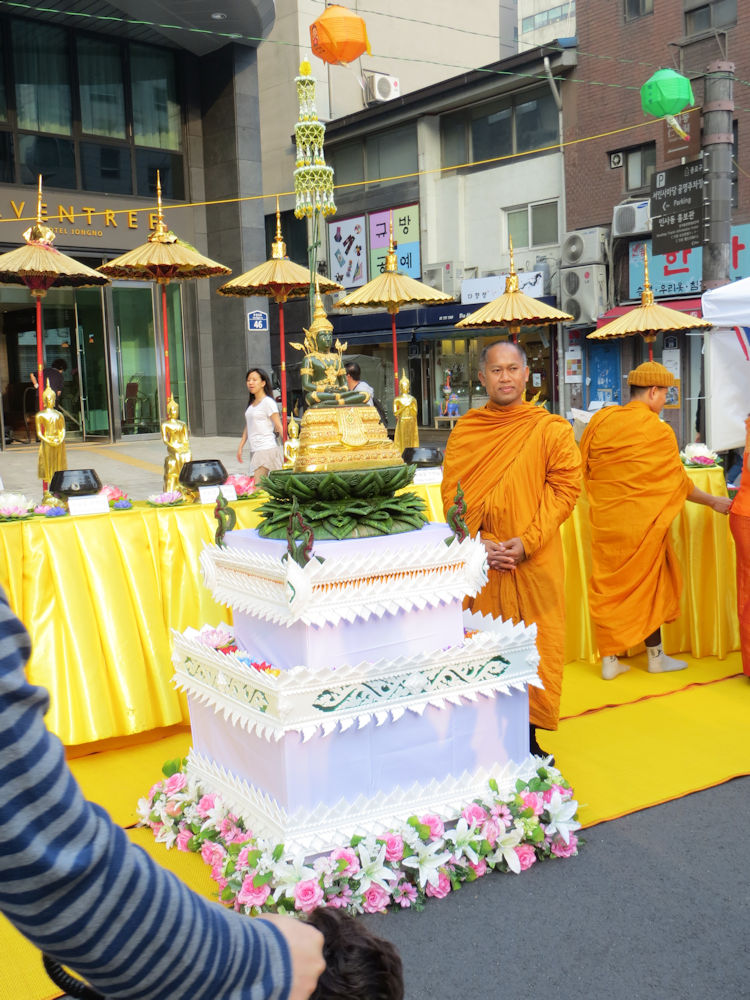
We checked back into Pop Jongno Hotel. After a brief settling in, we went out to the streets to see what was left of the Lantern Festival (the Lantern Parade in honor of Buddhas’s birthday had been the night before – Saturday night the 11th). We walked north from Pop Jongno and were surprised to find a much more upscale area of this part of Seoul than what we had seen along Jongno-Ru. Classier food places, classier retail shops, and nicer arts. But we were looking for the festival, and continued N and W to find a particular temple area. Finally we asked a policeman and found the street fair – a whole length of street was roped off to traffic, and crowds of Koreans, families, westerners were enjoying booth after booth of presentations related to Buddhism. There was a Korean Buddhist booth; one for Chinese, Hindu, Tibetan, Cambodian, Thai, Japanese. One booth was devoted to vegetarian temple food – and a sense of humor was evident in the food shapes and names to make them resemble particular meat dishes.

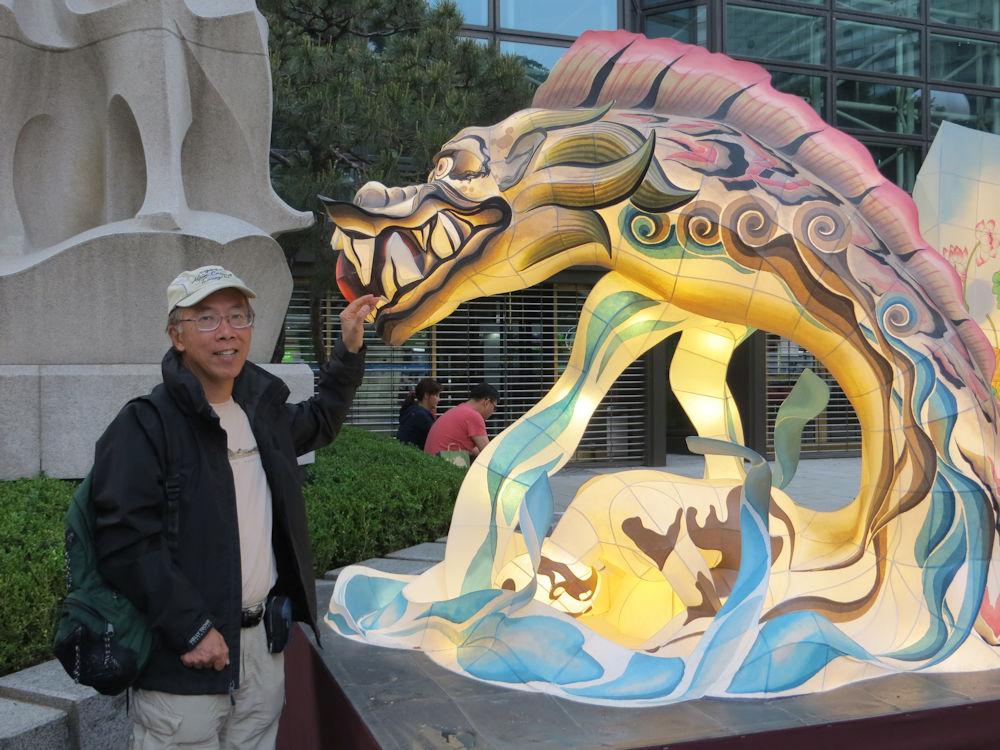
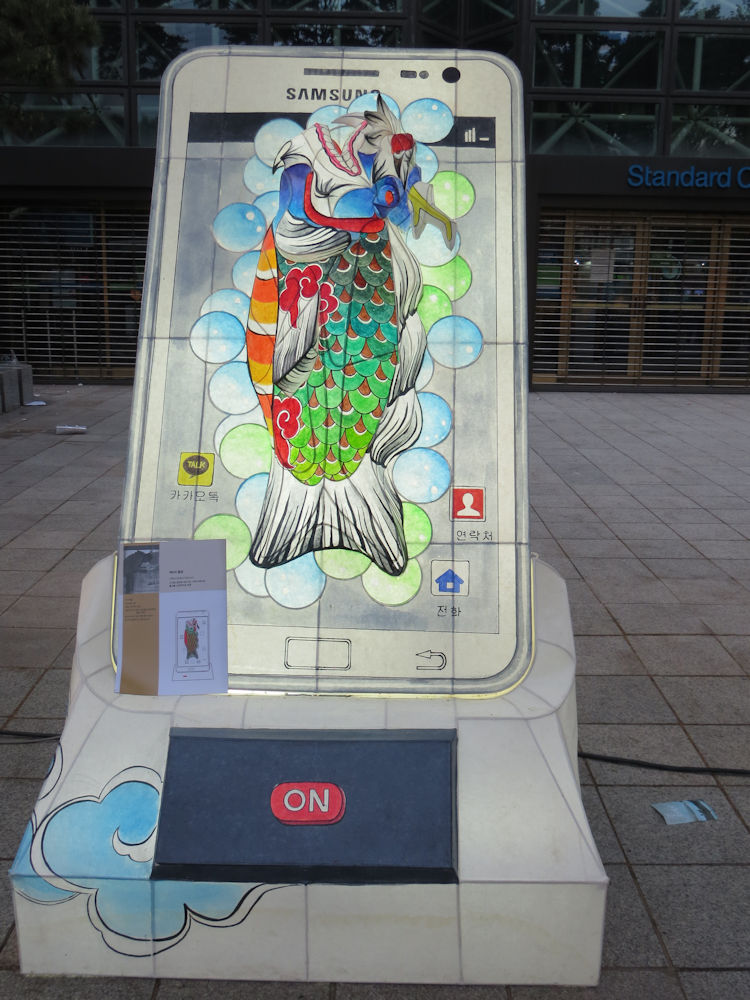
There was a booth where you could make a woodblock print; a booth teaching drumming; and we made two handkerchiefs at a booth that taught how to tie-dye using natural indigo blue dyes. I talked to a young man at a booth title Nacre Ware, where gleaming beautifully formed wood bowls and other wood pieces were on view. Since he spoke English in perfect American, I asked him where he was from – “US”. He is here on apprenticeship, spending as many years as he can to learn this lacquer artform. Nacre is a name of tree whose sap is used for the lacquer. He has been here 1-1/2 years. We found the remnants of the lantern festival – the lantern centerpieces from floats had been placed around a square next to the street, we took photos.

Dinner that evening was on foot – David wanted to try the street stalls near the Jongno Hotel. I was having digestive problems again and did not eat much. He tried grilled chicken kabobs and shrimp. One of the sellers, after David had finished and we started to walk away, said (in Korean) – “You did not pay!” David told her he had paid, but she did not understand English. Their discussion must have gotten a little loud, because a young woman overheard and intervened, “Can I help you here?” David explained that he had paid a five, and gotten two in change – “here is the change – I didn’t even put it back in my wallet yet.” Apparently the young woman was able to explain this to the seller, who seemed to back off and accept this. It gave us an uncomfortable feeling, and we headed back to hotel. May 13, Monday was our last day and day to head to airport, but David’s flight was not till 5 pm so we had a half day to kill. After breakfast at Holly’s Coffee (not as good pastry selection as Starbucks or Paris Baguette) we took the subway to Gangnam part of city which is south of the Han River. David noted that one of the subway stations on the way is called Jamwon, Jam means silkworm in Chinese. In Gangnam we walked around, it is very prosperous retail and office area, all high rise. In the “alley” behind the main street I was expecting to see the dirtier, more crowded, lower rent establishments similar to our Jongno area, but it was still upscale, just focusing on restaurants and high end fashion. Outside a Japanese restaurant, the waiters and waitresses were all loudly repeating Japanese words – learning to play the part.


Back on subway to Jongno, checked out around 12:30 pm, then the subway to Seoul Station where we got AREX train to Inchon Airport – a 43 minute ride for about $15 US. Nice and comfortable. We had used up all our subway card money – perfectly down to zero. At the airport we went through security together then relaxed in the Star Alliance International Lounge – not a full meal, but some little green salad and some appetizer and some grilled vegetables. Free coffee, not too bad.
==== THE END ====
|